11 June 2026
More than Shoelaces
← Back
Written by Kaye Moors
Making Every Step Easier
For many people, tying shoelaces is such a routine task that it barely warrants a second thought. But for millions of others, it can be a daily frustration.
Whether it's a child struggling to master the skill, an older adult living with arthritis, someone who has cerebral palsy, something as simple as tying a shoe can become a barrier to independence. Navigating a world with one arm suddenly after a stroke meant I had to rely on my husband or children to do the most basic of tasks.
Even those with a temporary disability may benefit from these no-tie laces. A pregnant woman may struggle to bend over a growing bump or someone who is experiencing recovering from injury may not be able to reach down to their feet.
That's where innovative products like Teezy Laces are helping to make a difference.
The Hidden Challenge of Shoelaces
Traditional shoelaces require a surprising amount of dexterity, coordination, grip strength, and flexibility.
For people with conditions that affect fine motor skills, the process of creating and tightening a secure knot can be difficult, time-consuming, or sometimes impossible without assistance.
This would include, but would not be limited to:
-
Cerebral palsy
-
Arthritis
-
Parkinson's disease
-
Multiple sclerosis
-
Dyspraxia
-
Autism (where fine motor challenges may be present)
-
Hand injuries or reduced hand function
-
Stroke survivors
-
People with limb loss
The challenge isn't limited to hand movements either. Many people find bending down to tie shoes uncomfortable or painful due to back pain, hip or knee problems or any kind of reduced mobility. Traditional laces can come undone so there is a risk of tripping so this is not necessarily a on-and-done daily task.
Balance issues and Age-related stiffness may also mean that tying your shoes by yourself is no longer possible. Young children can struggle with lace-tying, often needing years of practice before they feel confident enough to do it independently.
A Better Solution
TEEZY was founded in 2023 after its creators noticed a common frustration affecting people at every stage of life. From helping children get ready for school, to supporting family members with autism, to watching ageing parents struggle with traditional lace-up footwear, they saw that existing "no-tie" solutions often came with compromises.
Many alternatives relied on bulky toggles, complicated fastening systems, or designs that changed the look and feel of the shoe.
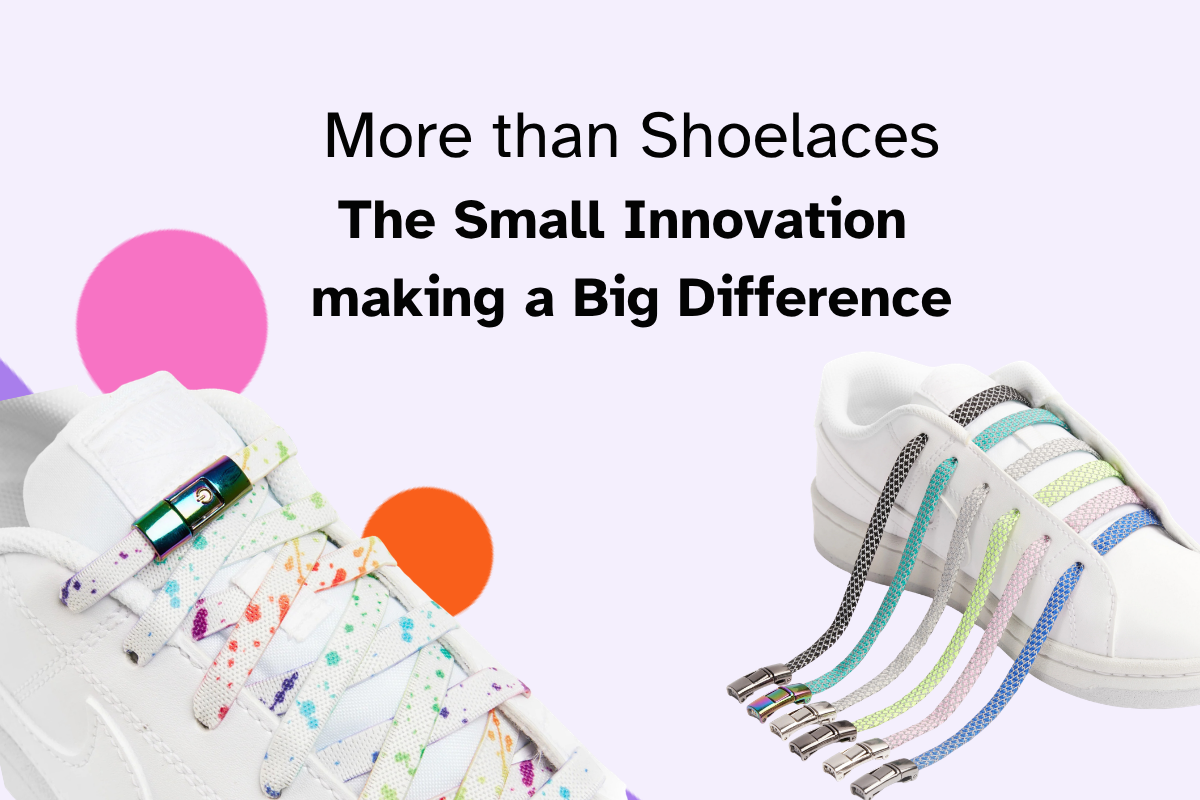
The goal was simple: create a lace that works effortlessly while still looking like a traditional shoelace. The result was Teezy's elastic lace system, designed to transform lace-up shoes into easy slip-on footwear without sacrificing style.
What makes products like Teezy Laces particularly interesting is that they embody a key principle of inclusive design: creating solutions that benefit a wide range of people.
The range of options mean people have the choice of sporty or casual designs to colourful paint splashes. There is also reflective options for night-time runs, cycling commutes in winter and dog walking at dusk.
Small Changes, Big Impact
Accessibility innovations don't always need to be complex or high-tech. Sometimes the most effective solutions are the simplest.
A shoe that can be slipped on instead of tied may save only a few minutes each day, but more importantly, it can reduce frustration, increase confidence, and support independence.
For people who regularly encounter barriers in everyday activities, these seemingly small improvements can have a meaningful impact on quality of life and products like Teezy Laces show that accessibility products don’t need to be marketed exclusively to disabled people.
The best inclusive products often appeal to everyone.
Stepping Forward
Since launching, Teezy has grown rapidly, selling more than 150,000 pairs of laces and becoming one of the UK's bestselling elastic shoelace brands.
But beyond the sales figures, their success highlights something bigger: there is enormous demand for products that remove everyday barriers.
Whether it's helping someone with cerebral palsy manage their footwear independently, supporting an older adult with arthritis, giving children more confidence, or simply making life a little easier for everyone, innovations like Teezy demonstrate the power of thoughtful design.
Because accessibility isn't always about reinventing the wheel. Sometimes it's about rethinking the shoelace.
Please note: Never Grey are not responsible for content found on third party websites