17 September 2026
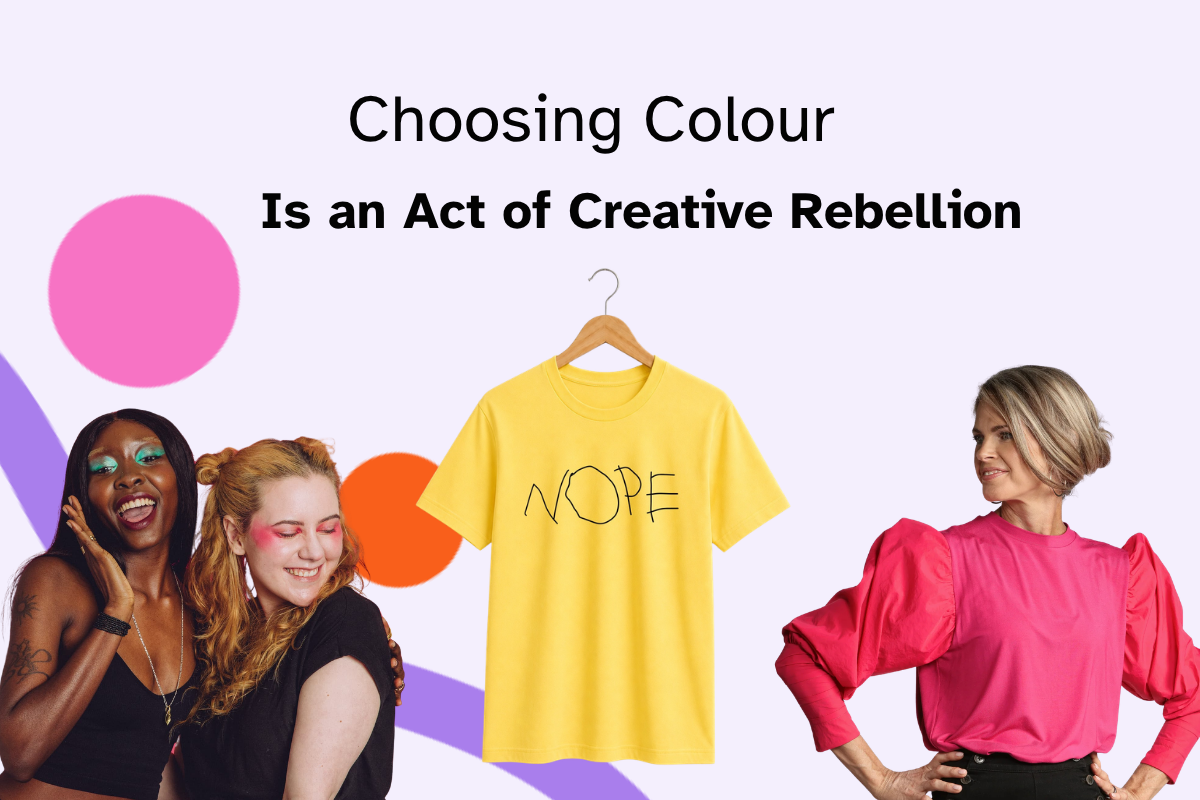
Choosing Colour is an act of Creative Rebellion
← Back
Written by Kaye Moors
Why are so many disability-related clothing, products and equipment expected to be grey?
Grey walking sticks. Grey wheelchairs. Grey medical equipment.
Of course, there are practical reasons why certain products are designed the way they are. But somewhere along the way, functionality became almost synonymous with clinical, muted and institutional.
And that's a problem.
Because disability doesn't erase someone's personality, their sense of style or their desire to express themselves.
At Never Grey, we believe ditching the muted, institutional grey can be an act of creative rebellion. It's about demanding that our aids align with our aesthetics. Turning essential everyday tools into brilliant extensions of our personal style.
Function doesn't have to mean boring
There's a strange assumption that if something is designed to support a disabled person, its appearance doesn't really matter. As long as it works, that's enough.
But imagine applying that logic to everything else we use. We don't buy clothes purely because they keep us warm. We choose colours and cuts of clothing because they say something about us. Soft fabrics may be comfortable but if they come in our favorite colours, or with slogans and prints that catch our eye, we will pop it in our online basket or take it to the till as it’s something we want to own, something we want to be able to wear.
We don't choose a handbag, pair of trainers or piece of jewellery solely because it performs a practical function. We choose them because we like how it looks, how it feels and how it makes us feel. So why should mobility aids and adaptive products be different?
Function and style aren't opposites.
A product can be incredibly practical and still be beautiful, expressive, colourful, playful or completely outrageous.
Style is part of identity, it is a universal language. It's one of the ways we tell the world who we are without having to say a word.
For disabled people, that doesn't suddenly stop being important because we use a walking stick, wheelchair, hearing aid, orthotic or other assistive device. In fact, when an item becomes something we use every day, its appearance can become even more significant.
If you're carrying, wearing or using something for hours every day, you should have some say in what it looks like. That's not vanity, it's choice. It's being able to look in the mirror and still recognise yourself.
Taking back the spotlight
There's another reason appearance matters. Disabled people are often already made to feel completely invisible or like their disability is the most interesting thing about them.
The condition or diagnosis can become the focus. How they are ‘different’ can be what people zoom in on. I’ve spoken before about forced intimacy and the expectation they should share personal details and relive traumatic experiences in the retelling.
Expressive design can help shift that narrative. A beautifully decorated walking stick can be a fashionably functional accessory. An awareness raising t-shirt can invite a positive enquiry, or a prosthetic cover, like those from LimbART can encourage curiosity which is answered with a sense of humour.
A dazzling diamante hearing aid cover is still doing its job but it doesn't have to define the person using it.
Rejecting the sea of standard issue
There's something powerful about choosing something that feels distinctly you when the alternative is another piece of standard-issue equipment.
It might be bright pink and covered in crystals or inspired by nature.
Quirky, boldly colourful or elegant and minimalist. There isn't one way to make disability equipment stylish because there isn't just one way to be disabled.
Personalisation matters precisely because people are different. Many of our brands at Never Grey, such as Glamsticks, offer bespoke or customisation options for this reason. Our tastes are different. Our bodies are different. Our identities are different. Our lives are different.
So why should our equipment all look the same?
Make the world a little less grey
This is one of the reasons we’re here. We want to showcase brands that are challenging the idea that accessibility has to look clinical, old-fashioned or, well... grey.
From adaptive clothing and footwear to mobility aids, sensory products, wearable technology and accessories, we're interested in products that recognise the person before the equipment.
Because accessibility should never mean sacrificing style and disability shouldn't mean surrendering your individuality.
There's sometimes an uncomfortable suggestion that disabled people should be grateful simply to have something that works and yes, functionality matters enormously but wanting something functional and beautiful isn't asking too much.
Wanting adaptive clothing that makes you feel good isn't superficial. An everyday item like a pair of jeans that accommodate an ostomy bag or a cup holder for your coffee attached to your wheelchair can be about confidence, autonomy, independence and self-expression.
They can be about taking up space and refusing to disappear into the background.
So choose the electric blue skirt from Unhidden.
Choose the bright pink zebra wheelchair armchair bag from Vilbers.
Add the crystals to your crutches with Glamsticks.
Wear the bold outfit. Customise the equipment. Make it yours.
Please note: Never Grey are not responsible for content found on third party websites